Technical Guide
How to Prevent Bubbles in Resin Figurine Casts?
Aug 23, 2026 · Resin Factory
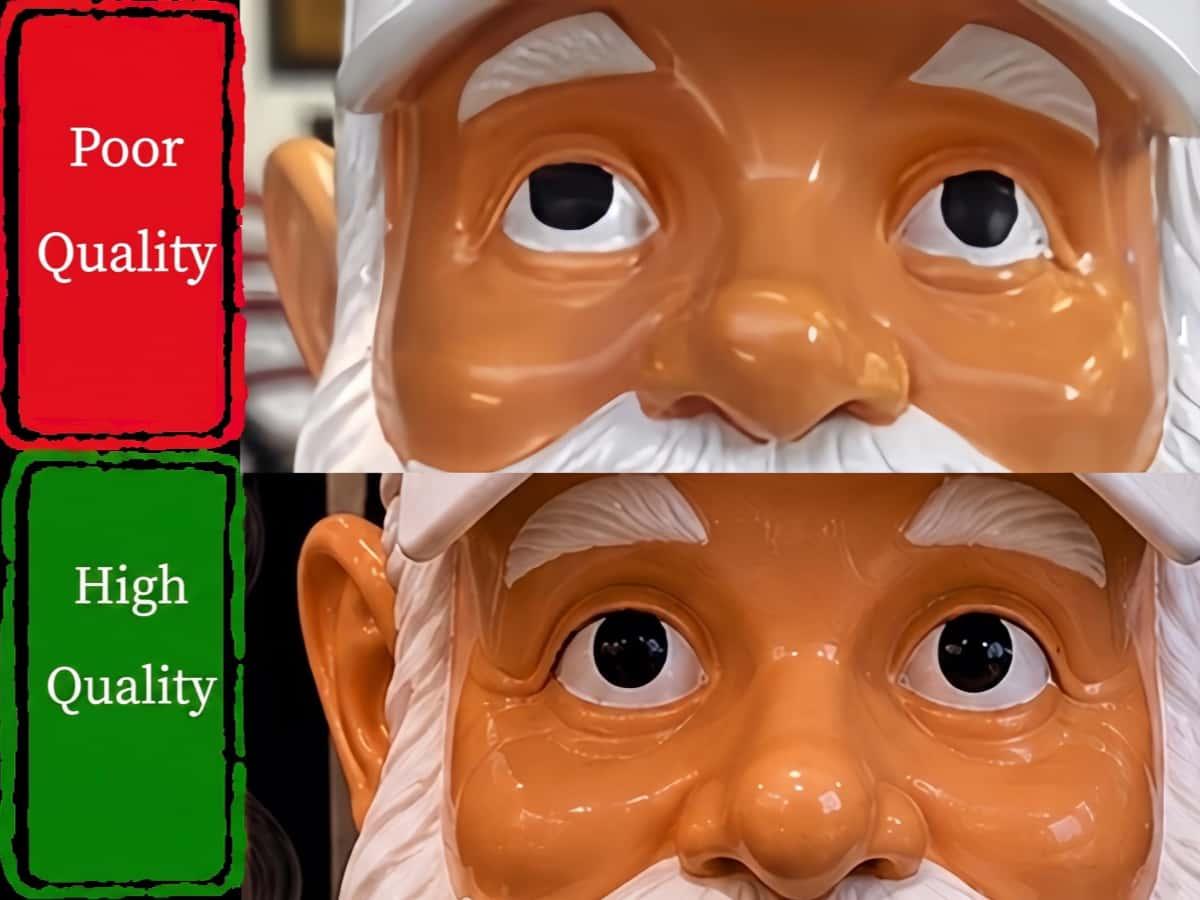
Surface bubbles and pinholes are common defects in resin casting. Here's why they happen — and how to prevent them.
## Quick Answer
**3 main causes of bubbles in resin figurines:**
1. Insufficient air compressor pressure
2. Insufficient processing time in air compressor
3. Inexperienced operators
**Solution:** Ensure air compressor pressure ≥50 PSI, processing time ≥3 minutes, and operators are professionally trained. Bubble defect rate can be controlled to <1%.
## Problem
You receive a batch of resin figurines. The overall shape looks good, but when you examine them closely, you notice small bubbles on the surface — or worse, pinholes that expose the raw resin underneath.
These defects aren't just cosmetic. They:
- Reduce product durability
- Require expensive rework
- Damage brand reputation
- Lead to customer complaints and returns
## Cause
**1. Insufficient Air Compressor Pressure**
The pressure pot (air compressor) doesn't have enough pressure to compress microscopic bubbles in the resin to invisible size.
- Standard pressure: 50 PSI (3.4 bar)
- When pressure is insufficient: bubbles can't be compressed, expand after curing
- Result: surface bubbles and pinholes
**2. Insufficient Processing Time in Air Compressor**
The resin doesn't stay in the pressure pot long enough for bubbles to be compressed or released.
- Standard time: 3-5 minutes (vacuum degassing) + 2-4 hours (pressure curing)
- When time is insufficient: bubbles not fully processed
- Result: internal bubbles remain, expand to surface later
**3. Inexperienced Operators**
Operators lack experience and don't know how to properly operate equipment or judge processing results.
- Don't know how to check vacuum level
- Don't know how to judge if resin is fully degassed
- Don't know when to stop processing
- Result: unstable processing results, fluctuating defect rates
## How to Prevent
**For Cause 1: Ensure Air Compressor Pressure Meets Standards**
- Use pressure gauge to regularly inspect equipment
- Pressure setting: 50 PSI (3.4 bar) minimum standard
- Check pressure before each production batch
- Record pressure data, establish equipment files
**For Cause 2: Ensure Sufficient Processing Time**
- Vacuum degassing: 3-5 minutes (29+ inches Hg vacuum level)
- Pressure curing: 2-4 hours (50 PSI pressure)
- Use timer to strictly control time
- Record processing time for each batch
**For Cause 3: Train Operators**
- Establish Standard Operating Procedures (SOP)
- Training includes:
- How to operate vacuum degassing machine
- How to operate pressure pot
- How to check vacuum level and pressure
- How to judge if resin is fully degassed
- Only qualified operators can work
- Regular retraining (once every 3 months)
## How Resin Factory Handles It
**1. Equipment Management**
- Air compressor pressure: 50 PSI (3.4 bar)
- Vacuum degassing machine: 29-30 inches Hg
- Check equipment before each production batch
- Establish equipment maintenance files
**2. Time Control**
- Vacuum degassing: 3-5 minutes (use timer)
- Pressure curing: 2-4 hours (use timer)
- Record processing time for each batch
- Products with insufficient time cannot flow to next process
**3. Operator Training**
- All operators must receive professional training
- Training includes equipment operation, quality judgment, abnormal handling
- 100% pass rate required before working
- Retraining every 3 months
**4. Quality Inspection**
- 100% visual inspection (D65 standard lighting)
- Check all surfaces: front, back, sides, base, details
- Rejection criteria:
- Surface bubbles: >0.5mm = reject
- Pinholes: any visible pinhole = reject
- Internal bubbles: X-ray inspection for critical orders
**5. Documentation**
- Photo report for every batch
- Record equipment parameters (pressure, time, temperature)
- Record defect statistics
- Provide inspection reports to clients
**Our Commitment:**
- Defect rate <1%
- 100% visual inspection
- Any bubble >0.5mm or visible pinhole = reject