Industry Insights
Why Small Stone Statues Look Fake — The Weathering Texture That Makes the Difference
Aug 11, 2026 · Resin Factory
For 8-15cm stone-look Buddha statues and sculptures, most manufacturers focus on perfect shape replication. But the real secret to authenticity isn't the carving — it's the weathered, granular texture that mimics centuries of natural erosion. Here's why that matters and how we achieve it.
Walk through the Bamiyan Valley in Afghanistan, the Yungang Grottoes in China, or the Borobudur Temple in Indonesia, and you'll see the same thing: stone Buddha statues that have stood for centuries. Their surfaces are not smooth. They're pitted, granular, weathered by wind, rain, and time. That texture isn't damage — it's authenticity. It's what makes these sculptures feel real, sacred, and timeless.
Now consider the small stone-look products we make for tourist souvenirs, museum replicas, or promotional gifts — typically 8-15cm tall. Most manufacturers approach this the wrong way. They focus entirely on shape: perfect carving, smooth surfaces, sharp details. The result? A product that looks like plastic painted to look like stone. It feels fake in your hand. It looks like a toy, not a sculpture.
The problem isn't the carving. The problem is the missing texture. Real stone weathers. Real stone has granular surfaces, tiny pits, and uneven color absorption. When you replicate a 1,000-year-old Buddha statue but leave the surface perfectly smooth, you're not capturing its essence — you're capturing a lie.
Here's the truth: for small stone-look products, the weathering texture matters more than the carving precision. A slightly imperfect carving with realistic weathering will always look more authentic than a perfect carving with a smooth surface. The granular texture is what tells the viewer's brain: 'This is stone. This is old. This is real.'
Let me show you what I mean. Below are three images: a real product photo, a 3D model without weathering texture, and a 3D model with weathering texture. These are 3D renders, not actual products — but they illustrate the difference clearly.
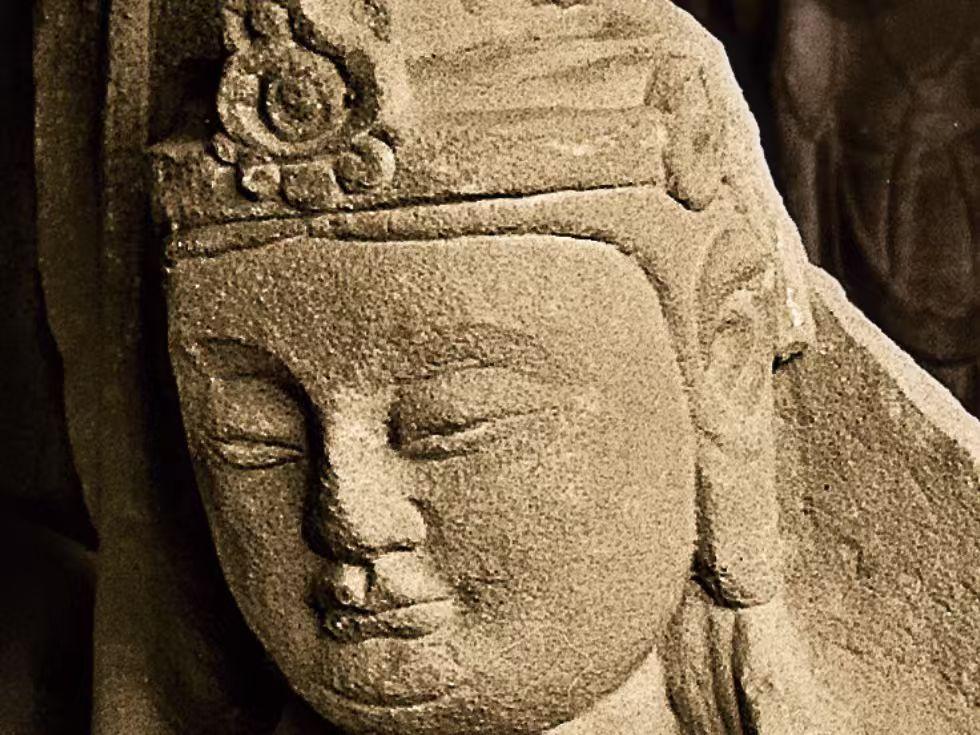
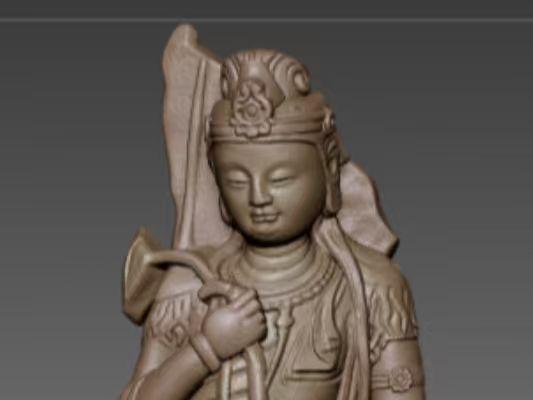
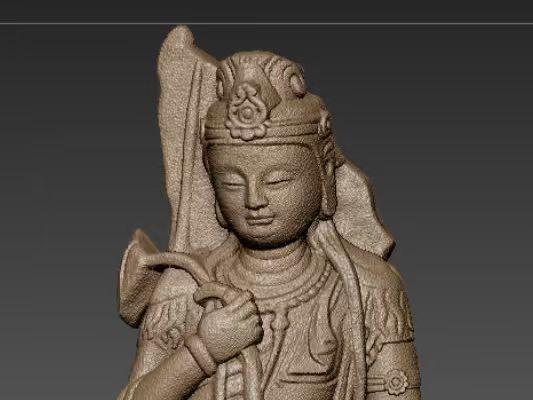
The left image shows a real stone statue with natural weathering. Notice the granular surface, the tiny pits, the uneven color. The middle image is a 3D model of the same statue — perfect carving, but no texture. It looks like a toy. The right image is the same 3D model with weathering texture added. Now it looks like stone. The difference isn't in the shape — it's in the surface.
How do we achieve this texture in small products? We use a combination of techniques: sandblasting to create the granular base, acid etching to deepen the pits, and hand-painting with mineral-based pigments that absorb unevenly into the surface. It's more labor-intensive than smooth painting, but the result is a product that feels like it was carved from real stone — because it looks like it's been through centuries of history.
If you're producing small stone-look Buddha statues or sculptures for tourist markets, museum shops, or cultural promotions, don't fall into the 'perfect carving' trap. Your customers aren't looking for perfection — they're looking for authenticity. They want to hold a piece of history in their hands, not a plastic toy. The weathering texture is what makes that happen. It's the difference between 'looks like stone' and 'feels like stone.' And in the souvenir business, feeling real is everything.